


Types of garden edging sto define your outdoor spaces
Garden edging borders help to define contours, add elegance and organise your outdoor spaces and garden. But with the variety of materials and styles available, choosing the right edging can be a challenge. Discover the different types of garden edging to find the one that best suits your needs.
Wooden borders: rustic and versatile
Wooden borders offer a natural charm that blends in perfectly with both rustic and contemporary gardens. Easy to install, they are easy to cut and place, adding a warm touch to your flowerbeds or pathways. Regular maintenance and treatment for weather resistance are necessary to prolong their durability.
Metal edging: elegance and durability
Metal edging, often in galvanised steel or aluminium, gives your garden a modern, understated look. Their durability is a major advantage, making them weather-resistant and low-maintenance. Flexible and adaptable, they can be used to precisely define the contours of flower beds or paths.
Natural stone edgings: authentic and robust
Natural stone edging, such as slate edging, sandstone, cobblestone edging, granite or alpine stone, adds an authentic, timeless touch to your garden. Their solidity and resistance make them a durable choice. They blend in perfectly with traditional or contemporary designs, adding a touch of elegance or modernity with slate edging.
Reclaimed cobblestone kerbs
Reclaimed kerbstones offer a practical and environmentally-friendly solution. Easy to lay, cobble kerbs are available in a range of formats, colours and materials. These kerbs bring the charm and authenticity of the streets of yesteryear, and are durable and low-maintenance.
-

- Slate stone steps

-
- Bordure en pavés anciens

-
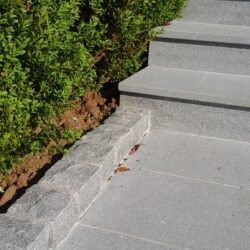
- Bordure en granit
Criterias to consider when choosing your garden edging
Aesthetics: Garden design: Make sure the edging fits in harmoniously with the overall style of your garden, whether modern, rustic, formal or natural.
Colour and texture: Opt for a border in a colour and texture that enhance the elements already present in your outdoor space.
Functionality: Delineate areas: Determine exactly where you want to place borders to delimit flower beds, paths or lawns.
Stability and durability: Choose a border that can withstand local weather conditions and is stable enough to prevent accidental movement.
Material: Wood, metal, stone, plastic or concrete: each material has its advantages. Wood adds a natural touch, metal is long-lasting, stone adds authenticity, and plastic and concrete are practical and affordable.
Maintenance requirements: Consider the level of maintenance required for each type of edging. Some require little maintenance, while others require regular treatment.
Cost: Determine the budget for your project. Prices vary according to the material and quality of the edging you choose.
