


What are the Origins of Granite?
Granite is a deep-origin igneous rock that has fascinated humans for millennia due to its beauty, durability, and resilience.
Composed mainly of quartz, feldspar, and mica, granite is a natural material that boasts exceptional physical properties.
Used since Antiquity in constructing monuments and statues, granite is now a highly sought-after material for both interior and exterior design, as well as in industry.
But what exactly is granite? What are its properties and applications?
Characteristics of Granite
The grainy texture of granite and its colour vary depending on the proportion of minerals it contains. Generally, granite is available in a wide range of colours, from white to black, including pink, grey, and yellow.
In terms of physical properties, granite is a highly resistant and durable rock. It is also dense and can withstand wear, scratches, and stains. Due to these properties, granite is often used for kitchen countertops, flooring, stairs, and building facades.
What are the Properties of Granite?
Physical Properties of Granite:
The Formation of Granite occurs through the cooling of magma, which transforms into an igneous rock with remarkable physical properties, making it a preferred material for construction and design.
Strength and Hardness
Granite is a very resistant and durable rock. It is hard and can withstand wear, scratches, and stains. This property makes it a popular choice for kitchen countertops, flooring, and building facades.
Density
Granite is a dense rock, giving it a sense of solidity and robustness. This property makes it resistant to wear, impacts, and pressure.
Variety of Colours
Granite is available in a wide range of colours, from white to black, including pink, grey, and yellow. This variety of colours allows architects and designers to choose the granite that best suits their project. The colour of granite depends on the location of its extraction as well as its composition.
-

- Roche granit gris foncé

-
- Roche granit rose et gris

-
- Roche granit gris et jaune

Chemical Properties of Granite:
Granite is an igneous rock with a complex and varied chemical composition.
Its chemical composition varies depending on its geological formation. This composition of minerals gives granite its resistance to acidity and durability and enables it to be recognised and differentiated from other natural stones.
Here are some of its most important chemical properties:
Mineral Composition
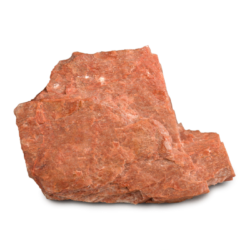
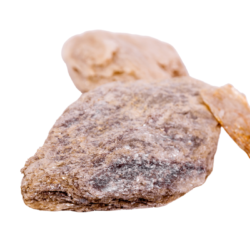
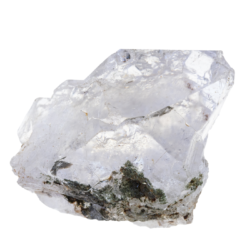
Granite is mainly composed of three minerals: feldspar, quartz, and mica. The proportions of these minerals can vary depending on the geological formation of the rock. Different types of granite are therefore classified according to their mineral composition.
-
- Feldspath
-
- Mica
-
- Quartz
Acid Resistance
Granite is resistant to acids due to its mineral composition. It can withstand acidic cleaning products such as vinegar and lemon juice. However, it is important to note that some granite stones may contain minerals that are more sensitive to acidity. Therefore, it is essential to test granite resistance before using it in projects exposed to acidic substances.
Thermal Properties of Granite:
Granite is a rock with many thermal properties, here are some of the most important ones:
Thermal Conductivity
Granite is a material that conducts heat very well. Its high thermal conductivity makes it useful in construction projects requiring thermal regulation. Granite can be used in constructing fireplaces, kitchen worktops, or floor tiles for effective thermal regulation.
Heat Resistance
Granite is also highly resistant to heat. It can withstand high temperatures without deforming or cracking. This property makes it an ideal material for construction projects that need heat resistance, such as fireplace cladding or kitchen worktops.
Thermal Expansion
Granite has low thermal expansion, meaning it does not expand much when exposed to high temperatures. This property is crucial in construction projects where different materials are used together. Granite can thus be employed in expansion joints to prevent cracks caused by thermal expansion.
What is the Hardness of Granite?
Granite is generally considered a hard rock due to its mineral composition and crystalline structure. Hardness is a measure of a material’s resistance to penetration and wear and is often measured on the Mohs Scale, which ranges from 1 to 10, where 1 is the softest and 10 is the hardest. The Mohs Scale evaluates the following 10 minerals:
Granite has a hardness of 6 to 7 on the Mohs scale. This means it is resistant to scratches and abrasions, making it a popular choice.

It is important to note that the hardness of granite can vary depending on its mineral composition. Some types of granite may contain softer minerals, which can affect their overall hardness. Additionally, factors such as porosity, texture, and surface treatment can also influence hardness.
What Type of Rock is Granite?
Based on its texture and mineral composition, granite can be classified in different ways.
Classification by Texture:
Granite’s texture can vary depending on the speed at which the magma that formed it cooled. Coarse-grained granites form when magma cools slowly underground, allowing minerals to crystallise and form distinct crystals. Porphyritic granites form when magma cools rapidly on the surface, creating a heterogeneous texture with larger, more visible crystals embedded in a finer matrix. Orbicular granites, on the other hand, are characterised by the presence of regular spheres or bubbles that form in the magma during crystallisation.
Classification by Mineral Composition:
Granite is mainly composed of quartz, feldspar, and mica, but its mineral composition can vary depending on the relative proportions of these minerals. Biotite and muscovite granites contain two types of mica.
Granites with alkali feldspar contain potassium- and sodium-rich feldspar, while plagioclase feldspar granites contain calcium- and sodium-rich feldspar. Quartz-rich pink granites have a higher concentration of pink quartz, while inclusion-bearing granites contain different mineral inclusions.
Other Classifications:
Besides classifications based on texture and mineral composition, granite can be categorised by other criteria, such as its geographical origin or its use. For instance, some granites are named after their place of origin, such as Brittany granite, Corsican granite, or the pink granite of Estérel. Other granites are classified based on their use, such as decorative granite, construction granite, or memorial granite.

